Lower-manipulation options
Loose twists or braids, a soft low bun, or a smooth wrap can help limit handling when they feel comfortable and allow scalp care.
THE HAIR LETTER / AURALENGTH
Choose styles by comfort, tension, heat, and how your hair feels underneath.
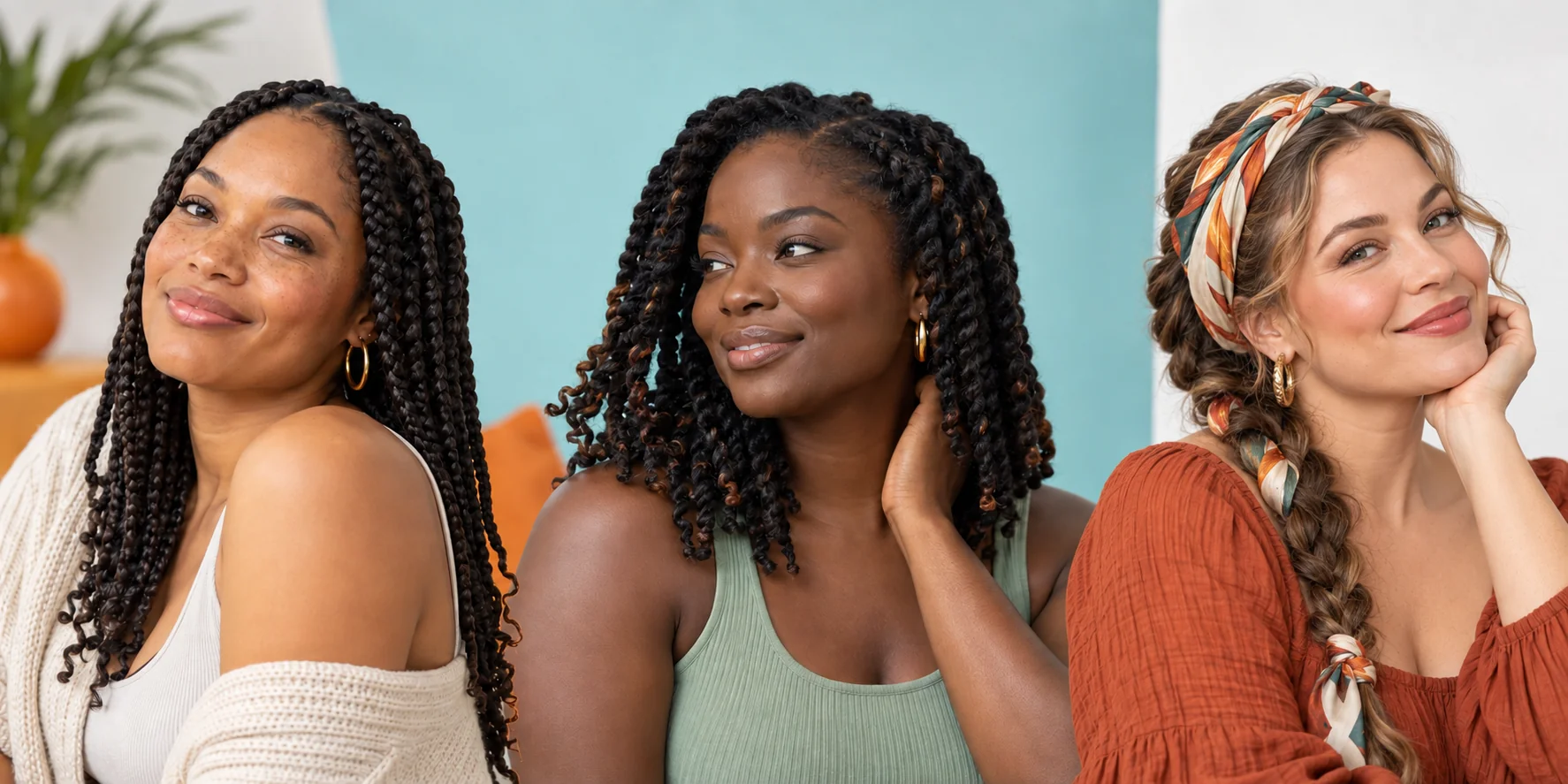

A hairstyle does not earn the word “protective” just because it has braids, twists, or covered ends. The real test is how it feels on your scalp, how much weight it adds, and how you care for the hair underneath.
Loose twists or braids, a soft low bun, or a smooth wrap can help limit handling when they feel comfortable and allow scalp care.
Wearing curls out, a loose ponytail, or a gentle blowout can also be kind to hair. The result depends on tension, heat, friction, and how often you repeat the style.
Tucking or loosely gathering the ends may reduce how often you brush, heat-style, or handle them. It can make a busy week simpler. It does not change how fast a follicle grows hair, and it still needs cleaning, moisture where helpful, and a chance for the scalp to rest.
Pain, a headache, stinging, bumps, or hairline tension are signals to loosen or remove it. Heavy extensions and very tight braids can keep pulling even while the style looks tidy. Repeated pulling can lead to traction alopecia; waiting for visible thinning is not the best time to act.
Loose natural hair, a low ponytail, and a careful blowout are choices, not mistakes. Change where an elastic sits, avoid repeated tension on one spot, and turn down the heat when using tools. Ask: “Can I move my eyebrows and turn my head without feeling a pull?” If not, loosen it.
The generated images are illustrations of style ideas, not proof that a particular braid, twist, or ponytail is safe for everyone. If a style hurts or the hairline is thinning, change it and consider seeing a dermatologist.