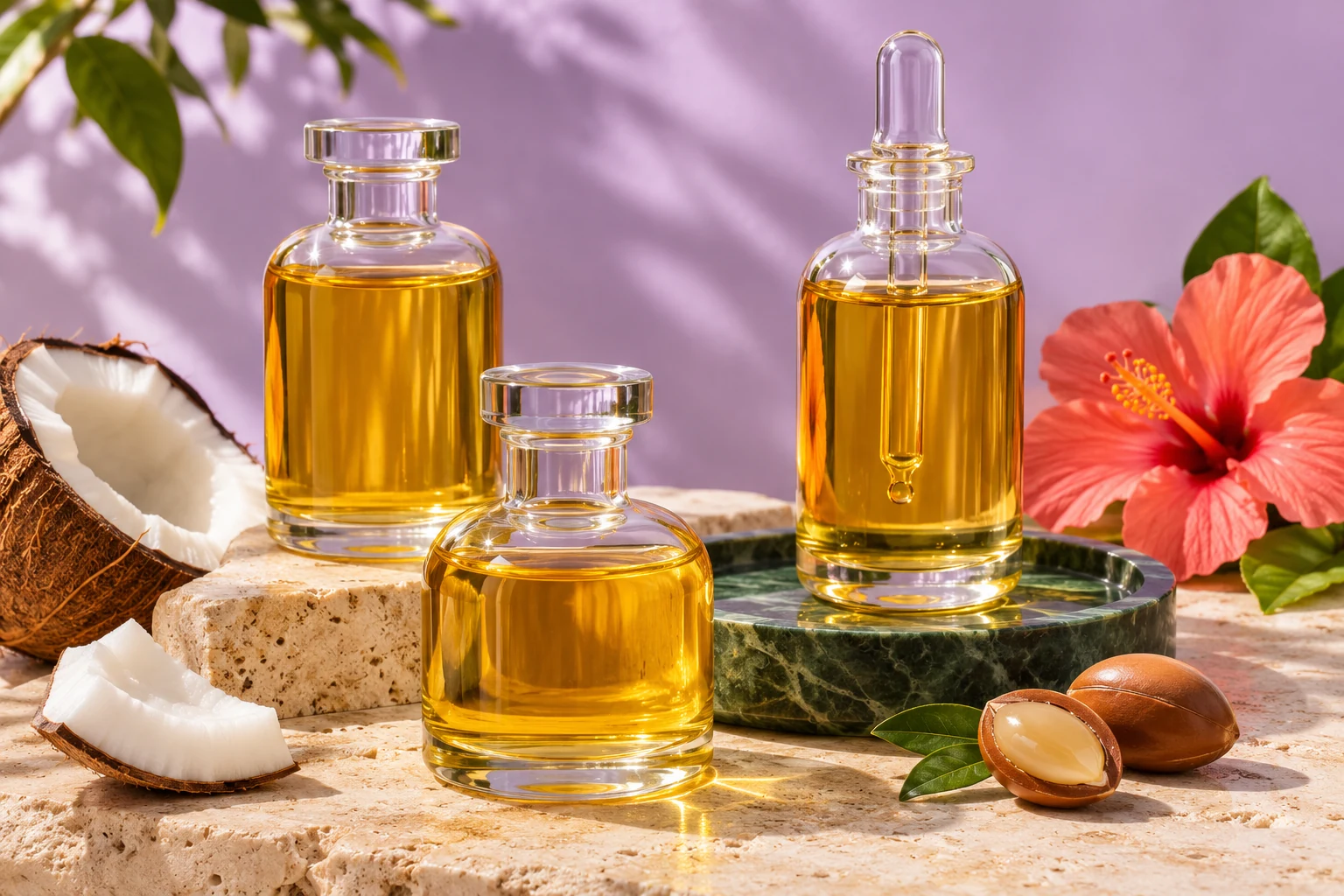
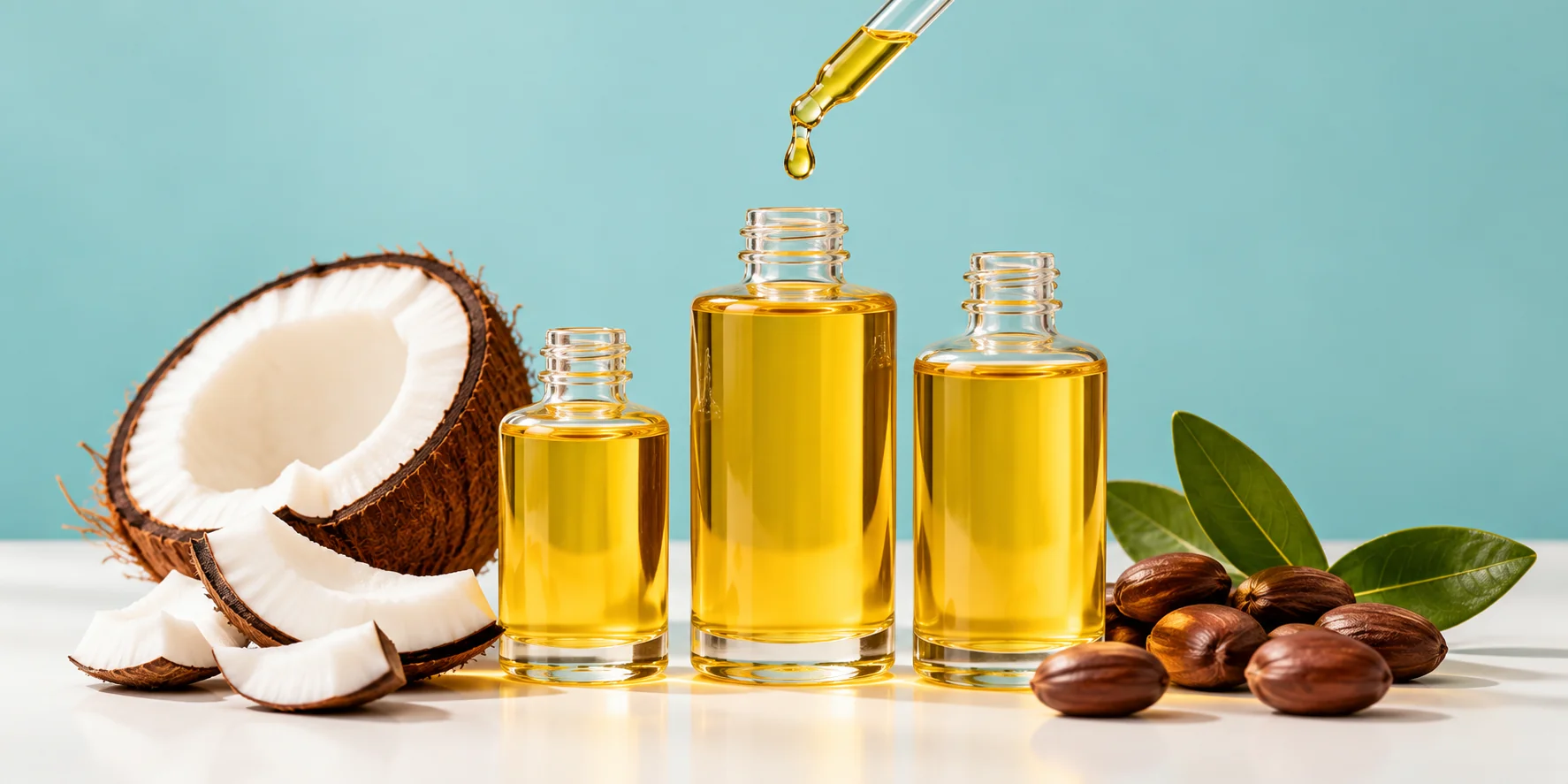
An oil does not add water to hair. Wash and condition first, use a water-based leave-in if helpful, then try a small amount of oil on the lengths to soften their feel and reduce friction. Hair texture is a starting point, not a rule: fine, dense, color-treated, and easily weighed-down hair may respond differently within the same curl pattern.
THE OILJojoba
What is in it: Mostly liquid wax esters, with small amounts of tocopherols (vitamin E compounds).
Best starting point: A light finish for fine, straight, or wavy hair; also useful in tiny amounts on any dry ends.
What it can do: A few drops can smooth the surface and add shine without starting with a heavy coating.
THE OILArgan
What is in it: Oleic and linoleic fatty acids, plus tocopherols (vitamin E compounds).
Best starting point: Wavy, curly, or coily lengths that feel rough; fine hair may prefer just a drop on the ends.
What it can do: A finishing oil that may make ends feel smoother and look shinier.
THE OILSunflower
What is in it: Often rich in linoleic acid and tocopherols; composition varies by seed variety.
Best starting point: A flexible, lighter carrier for straight and wavy hair, or a small part of a curl or coil blend.
What it can do: Helps spread a very thin coating over conditioned ends.
THE OILCoconut
What is in it: Rich in lauric acid; virgin oil may contain small amounts of vitamin E compounds.
Best starting point: Often better as a pre-wash treatment for thicker curls or coils; fine or stiff-feeling hair may prefer less or none.
What it can do: Unlike many surface oils, it can enter the hair fiber and has evidence for reducing protein loss during washing and grooming.
Each recipe makes about 2 teaspoons. Mix only the plain carrier oils in a clean, dry dish or small bottle. These are finishing or pre-wash blends, not water-based moisturizers. The suggested drops are a starting amount, not a requirement to use the whole batch.
Straight hair
Keep the roots oil-free if they get greasy quickly.
- Barely-there ends1 teaspoon jojoba + 1 teaspoon sunflower oil
Rub 1 drop between your palms; skim only the last few inches.
- Soft shine1 teaspoon sunflower + 1 teaspoon argan oil
Use 1 drop on conditioned, towel-damp ends.
Wavy hair
Scrunch gently so the waves keep their shape.
- Air-dry finish1 teaspoon jojoba + 1 teaspoon argan oil
Scrunch 1–2 drops into damp, conditioned ends.
- Light seal1½ teaspoons sunflower + ½ teaspoon argan oil
Smooth 1–2 drops over the outer lengths after leave-in conditioner.
Curly hair
Work in sections and start with less than you think you need.
- Curl-end cushion1 teaspoon argan + 1 teaspoon jojoba oil
Work 2–4 drops through damp, conditioned ends in sections.
- Before-wash coconut1 teaspoon liquid coconut + 1 teaspoon argan oil
Apply a thin layer to dry lengths 20–30 minutes before shampooing; rinse and condition.
Coily hair
Water and conditioner come first; oil is an optional finishing step.
- Section-by-section finish1 teaspoon argan + 1 teaspoon sunflower oil
Smooth a few drops across each damp, conditioned section, concentrating on ends.
- Gentle pre-wash1 teaspoon liquid coconut + 1 teaspoon sunflower oil
Coat lengths lightly for 20–30 minutes before cleansing; follow with conditioner.