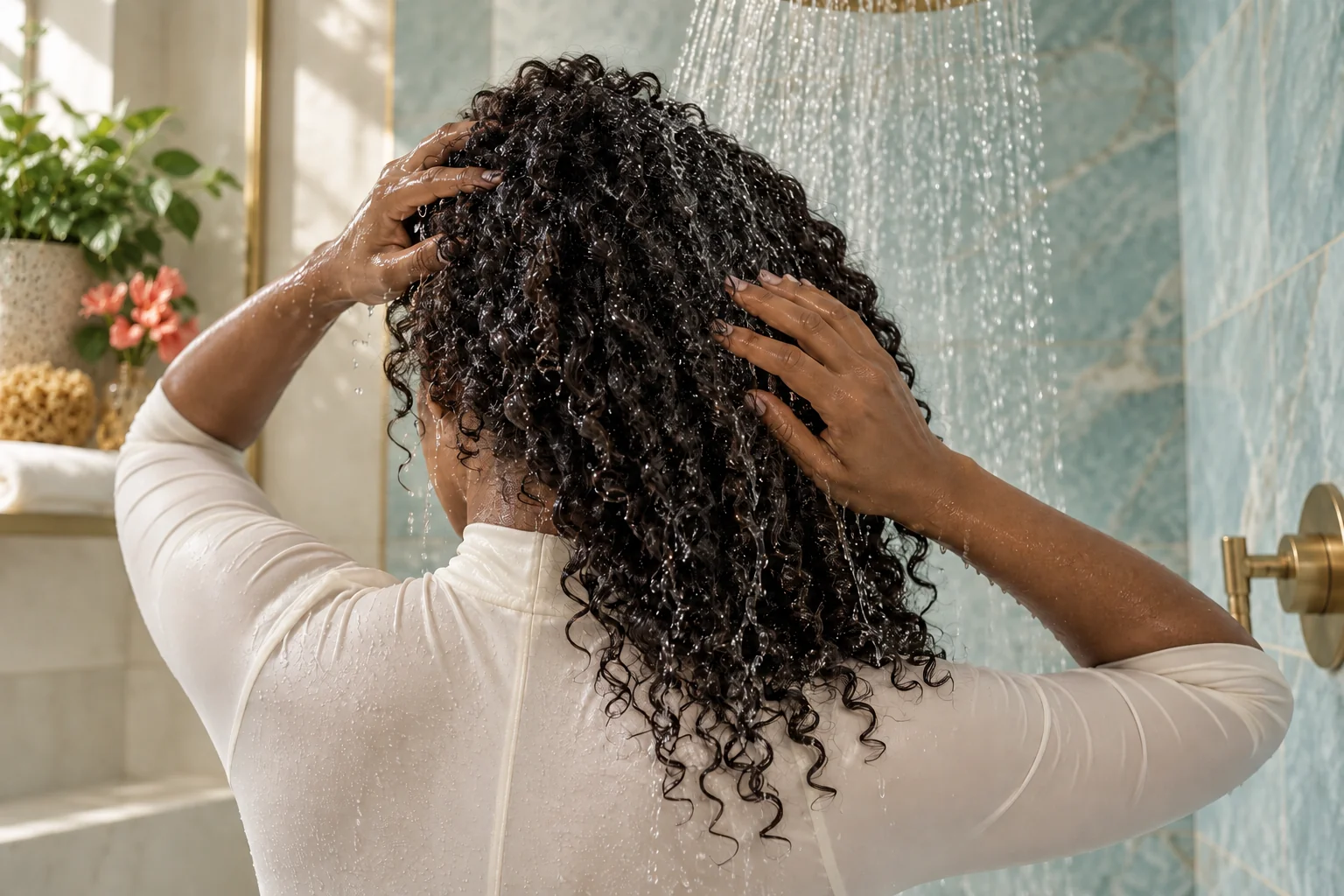
Porosity describes spaces and pathways in a hair fiber that affect how it takes up water. Bleaching, high heat, and other damage can change the hair surface and its water behavior. One head can even have different needs at the roots and older ends. Porosity is about the strand, not a diagnosis of your scalp.
When water seems slow to wet your hair
Water may bead on a coated or less damaged strand, but buildup and styling products can change what you notice. Wash as your scalp needs, rinse thoroughly, and apply conditioner to the lengths while wet. Start with a small amount of leave-in if you need slip; add more only if it helps.
When hair wets quickly but feels dry soon
More weathered or chemically treated lengths can take up water differently and may feel rough or tangle easily. Condition after washing, detangle gently, and use a leave-in on the lengths if it makes them more manageable. A light finishing product may reduce friction, but oil alone does not add water.
Let your response guide the routine
Notice wetting, drying, buildup, tangles, and how the ends feel over several washes. Change one product or step at a time. A single strand floating in a glass does not tell you exactly how all your hair behaves. Choose a routine by comfort and results instead of a fixed label.